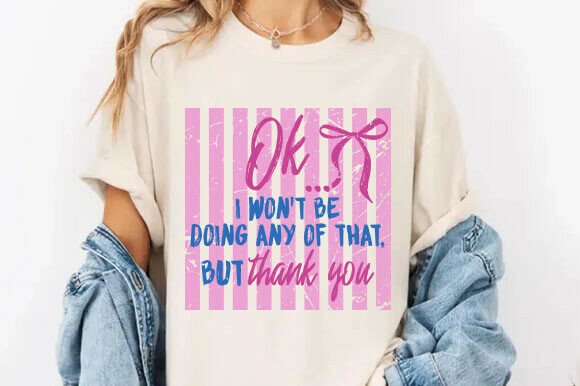
Ok I Won't Be Doing Any of That but Than
First Impressions: A Lighthearted Touch for Golf Enthusiasts
When I first opened the file for Ok I Won't Be Doing Any of That but Than, I immediately got the vibe—this is a design that’s meant to make people smile. It's playful, a bit cheeky, and clearly aimed at golf lovers who appreciate a good pun. The layout is simple but effective, with a clear focal point on the phrase itself. The font choice leans casual, slightly rounded, and friendly, which makes it ideal for embroidered apparel and accessories that aren't trying to be overly formal.
From a design standpoint, this phrase reads well at a glance, which is crucial for embroidered work. It doesn’t rely on overly intricate elements or tiny embellishments that could get lost in stitching. That’s a win for small business owners and Etsy sellers who may be working with basic embroidery machines or limited hoop sizes. The visual personality is approachable, making it a good fit for both men and women who enjoy a bit of humor in their wardrobe or home decor.
Real-World Embroidery: How It Performs Across Projects
I decided to test the design on a few different materials to see how it would hold up in real-life use. My first test was on a cotton tote bag. The lettering stitched cleanly, with no obvious distortion or thread bunching. The satin and fill stitches handled the curves well, and the overall clarity was good. It looked polished, not rushed—something that would stand out in a boutique or handmade shop.
Next, I tried it on a heavier fabric—a cotton-blend sweatshirt. This is where the design really came into its own. The boldness of the text and the spacing between letters helped maintain legibility without looking cramped. It’s not overly detailed, so it stitched quickly, which is great for small shop owners looking to maintain productivity without sacrificing quality.
I also tested it on a baby onesie. Surprisingly, the design scaled down well. I had to adjust the stitch density slightly to avoid stiffness, but once that was done, it looked cute and readable. It’s a nice option for personalized baby gifts, especially for parents who love golf and want to pass that passion on in a fun way.
Where to Use It Carefully: Fabric, Size, and Placement Considerations
While the design works well in most scenarios, there are a few places where you’ll want to be cautious. First off, if you're planning to use it on stretchy or thin fabric like jersey knit tees, make sure you use a good stabilizer underneath. I noticed a slight distortion in the corners of a few letters when testing on a thinner cotton shirt, which could be corrected with a lightweight tear-away stabilizer.
Dark fabrics also require attention. The white thread I used stood out nicely on black cotton, but if you're using a similar color palette, check contrast carefully. I recommend doing a quick black and white mockup first to ensure the design doesn’t get lost in the background.
For curved surfaces like baseball caps, the phrase may need some tweaking. It’s a longer text design, so centering it properly and adjusting hoop placement is key. If your machine allows for multi-hoop stitching, that could help preserve the design’s integrity without distortion.
Design Impact: From Visual Appeal to Customer Perception
What I like most about Ok I Won't Be Doing Any of That but Than is how it balances humor with professionalism. It’s not so silly that it feels juvenile, but it’s definitely got personality. That makes it perfect for small business merchandise, personalized gifts, or Etsy listings where the buyer is looking for something unique and conversation-worthy.
From a branding perspective, this design could work well for a boutique golf-themed apparel line or as a seasonal holiday gift. It’s easy to stitch, quick to produce, and has a high “giftability” factor. Customers appreciate a design that’s clean, readable, and makes them feel seen—especially if they’re part of a niche group like golf enthusiasts.
It also holds up well in digital mockups. When I added it to a printable sweatshirt mockup, the text looked crisp and realistic, which is important for digital product sellers who rely on accurate previews to convert buyers.
Designer Notes: Practical Tips Before You Stitch
Before jumping into production, here are a few practical tips I’ve picked up while working with this design:
- Test on scrap fabric first—especially if you’re using a new stabilizer or unfamiliar fabric type.
- Check thread color contrast against light and dark backgrounds. You may need to adjust thread shades for optimal visibility.
- Review stitch density if you're scaling the design up or down. A smaller version might need reduced density to avoid stiffness.
- Confirm hoop size before stitching. If you're working with a small hoop, you may need to split the design into sections.
- Inspect small details like the corners of letters. These can sometimes get flattened or distorted depending on fabric tension.
- Test in black and white mockups to ensure clarity before using on dark or patterned fabric.
- Use proper stabilizer based on fabric type—cut-away for stretchy materials, tear-away for stable cottons.
- Confirm licensing if you plan to sell finished items or digital embroidery files. Make sure the original design allows for commercial use.
Final Thoughts: A Versatile Design for Everyday Embroidery
Overall, Ok I Won't Be Doing Any of That but Than is a solid choice for designers and crafters looking for a lighthearted yet professional embroidery design. It’s easy to work with, scales well, and brings a smile to the face of anyone who sees it stitched out. Whether you're making custom apparel, personalized gifts, or boutique merchandise, this design checks a lot of boxes.
As with any embroidery file, it’s important to test and adjust for your specific machine, fabric, and project needs. But once you do, this design has the potential to become a go-to in your embroidery library—especially if your audience appreciates a little humor with their handmade goods.